
How Long Do Garage Door Springs Last?
A garage door spring typically lasts about 7–10 years, or roughly 10,000 open-and-close cycles; frequent use can shorten that span. If the door feels unusually heavy or will not move, stop operating it and call for professional spring service.
Need help now? (629) 283-1518
What Is the Average Lifespan of a Garage Door Spring?
A common residential garage door spring is rated for about 10,000 cycles. One cycle means the door opens once and closes once. For a household that uses the door several times every day, that can work out to roughly 7–10 years, but the calendar estimate varies with how often the door moves and the spring type.
A spring may reach its cycle rating sooner in a busy household, while a door used less often may keep its spring longer. Temperature changes, corrosion, door balance, and other wear can also affect service life. So, the spring’s age is a useful clue, not a reliable way to predict the exact day it will fail.
If you know when the spring or door was installed, record the date and compare it with changes in how the door moves. If you do not know its age, pay more attention to visible wear and changes in operation than to an estimate based on the door’s age.
Which Signs Suggest a Garage Door Spring Is Nearing the End?
Look and listen from a safe distance. Do not touch, loosen, or test the spring: garage door springs hold substantial tension, even when the door is closed.
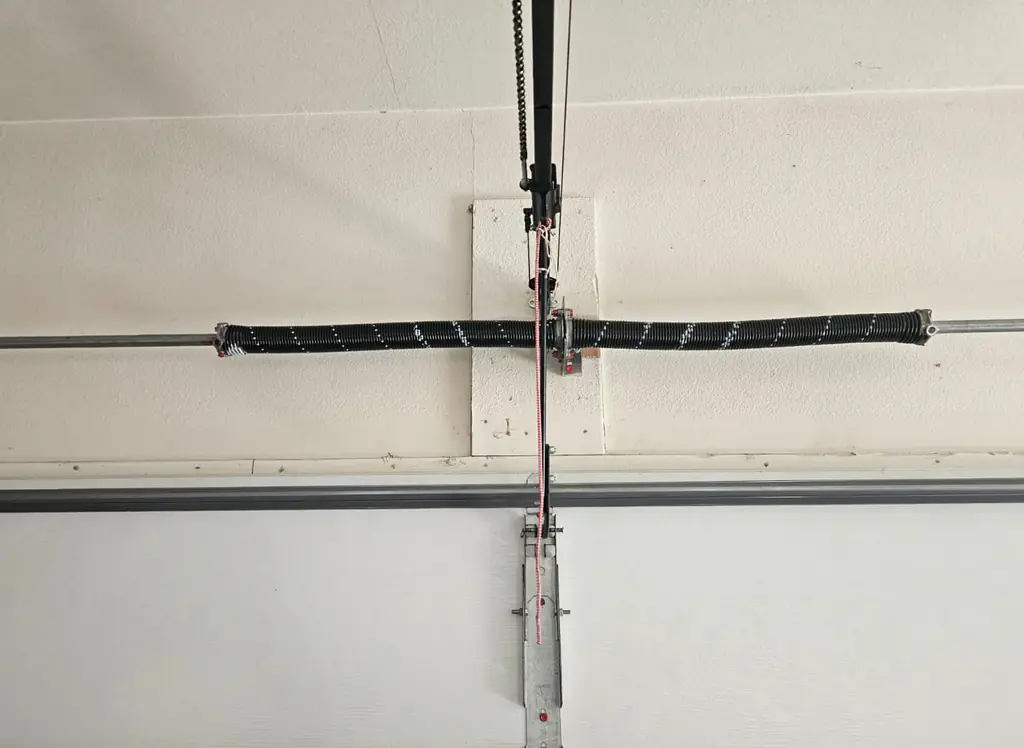
- A visible gap in a torsion spring — A gap in the coil can mean the spring has broken. Keep clear of the spring and do not try to reconnect it.
- A loud bang followed by a door that will not move — A spring can break suddenly and sound like a bang. If the door stops working afterward, do not keep pressing the opener button.
- The door moves unevenly or looks crooked — A door that rises unevenly may have a spring or another hardware problem. Stop using it and have the system checked.
- The opener strains, hums, or stops partway — A failing spring can leave the opener struggling with the door’s weight. Repeated attempts can add strain to the opener and door.
- The door feels unusually heavy — Do not try to lift a heavy door to test it. A change in door movement is enough reason to leave it alone and arrange an inspection.
How to Check Spring Wear Without Handling the Spring
These checks help you describe the problem; they are not repair instructions. Never adjust springs, cables, brackets, or other parts under tension. If you see damage or the door behaves unpredictably, stop and call a professional.
- Stop operating a door that is acting differently — Do not repeatedly run the opener to see whether the door will move. Check that the opener is no longer being used and keep people away from the door.
- Note what happened before the change — Write down whether you heard a bang, noticed slow movement, or found the door stuck. Check your notes for a clear sequence of events rather than trying the door again.
- Record how often the household uses the door — Use a calendar or notes app to estimate daily open-and-close cycles. A cycle is one opening and one closing; this gives a useful context for the spring’s approximate age.
- Look from a distance with a flashlight — Without reaching into the mechanism, look for a visible gap in a torsion spring or a spring that appears damaged. If you cannot see safely, skip this check and leave it to a technician.
- Observe the door’s position without moving it — From outside the door’s path, note whether it is level, crooked, or partly open. Do not stand under it or try to support it.
- Check the opener manual for safe shutdown guidance — Use the manual for your opener model if you need to understand its controls. Do not disengage the opener or attempt to move a door that may be unsupported.
- Share your observations when requesting service — Tell the technician what changed, when it happened, and whether the door is stuck open or closed. Confirm the door remains unused while you wait for professional help.
Need help now? (629) 283-1518
Which Spring Repair Option Fits the Door’s Condition?
A broken spring needs replacement rather than an adjustment by the homeowner. The right scope depends on the spring setup, the condition of the other spring if there is one, and the overall state of the door. A technician can inspect the system and explain which option fits.
Replace one spring
This may suit a door with a single spring or a system where the other spring is in suitable condition. The technician should assess the remaining hardware before recommending a single replacement.
Replace a matched pair
Some doors use two springs that have worked through similar cycles. If one has failed, the other may also be worn; ask the technician whether replacing both is appropriate for your setup.
Repair a related door or opener issue
A door that struggles or stops moving may have more than one problem. If the spring is not the only cause, the inspection can identify whether other parts also need attention.
Consider broader door work
Spring failure alone does not mean the entire door needs replacement. A technician can assess the door and hardware before you decide whether repair or a larger job makes sense.
What Can Go Wrong If You Keep Using a Worn Spring?
A worn or broken spring may no longer counterbalance the door’s weight. The opener can strain, the door can stop partway, and a door that is not supported properly can move unexpectedly. Continuing to operate it may turn a spring problem into a broader door or opener problem.
Do not pull on a spring, loosen its hardware, cut a cable, or try to lift a heavy door. Springs and cables can be under tension, and an uncontrolled door can cause serious injury or property damage. For maker guidance on basic home-door safety, see Clopay’s garage door safety checklist.
If the door is crooked, stuck, or making the opener strain, leave it alone and arrange garage door spring repair service. If a cable also appears damaged, do not handle it; spring and cable systems should be checked together by a professional.
When Should You Call for Garage Door Spring Repair?
Call when you see a gap or other visible spring damage, hear a sudden bang, or notice that the door has become unusually heavy, crooked, or difficult to operate. Stop using the opener while the door is stuck or behaving unpredictably. If it is open, keep people away from the area beneath it.
When you call, describe what you noticed and whether the door is open, closed, or stuck partway. Nashville Garage Door Services is open 24/7 and provides free estimates for all types of jobs by coming out to check the door. You can also reach us through our contact page.
Need help now? (629) 283-1518
What to Do After a Spring Inspection
Ask the technician to explain whether the spring is broken, what condition the other spring and related hardware are in, and what work they recommend. If the door is older or the spring’s history is unknown, share that information, but let the inspection—not an age guess alone—guide the decision.
Spring service is different from estimating the full cost of a repair. If you are comparing the scope of a spring job, our guide to garage door spring replacement costs covers that separate question. For help with a door that will not operate, see garage door repair in Nashville.
Frequently asked questions
Can I open my garage door if a spring is broken?
Do not operate the opener or try to lift the door when you suspect a broken spring. The door may be unusually heavy or unsupported, so keep people clear and call for professional service.
Should both garage door springs be replaced at the same time?
It depends on the door’s spring setup and the condition of the remaining spring. If both springs have seen similar use, ask the technician to inspect both and explain whether replacing a pair makes sense.
Does frequent garage door use shorten spring life?
Yes. Springs are commonly rated by open-and-close cycles, so a door used more often can reach its cycle rating sooner. Tracking how many times your household uses the door can help put its age in context.
Can I tell whether the spring or the opener is causing the problem?
A visible spring gap, a sudden bang, a heavy door, or uneven movement can point to a spring problem, but those signs do not confirm the cause. Stop using the door and have the spring and opener inspected rather than testing them yourself.
A Spring Problem? Call Us Now
Call Nashville Garage Door Services at (629) 283-1518 for help with garage door spring repair.